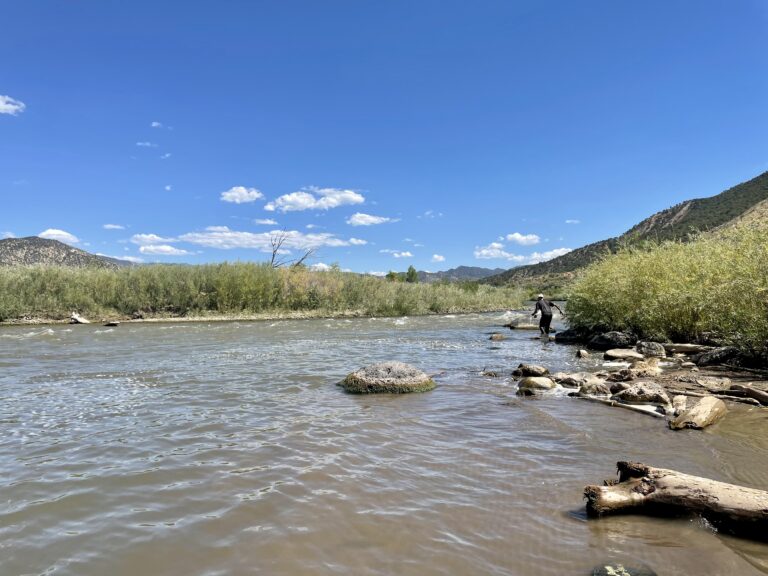
I’m fresh off a 5-day stretch of guiding and it was nothing short of a grind, mostly due to fishing dirty water. The past few days made me re-think fishing “dirty” water as I pulled out all the weapons in the arsenal and wasn’t rewarded as I would’ve liked to have been.
I spent three days on the Lower Gunnison battling the dirty water coming out of the North Fork. Overall, fishing wasn’t bad and we were able to catch fish most of the day. However, that morning bite seemed to be a bit more consistent and as the day matured, the sun beat down, it was reminiscent of those mid-day lulls that are notorious in these parts during the summer.
I’m thinking that warmer water coming out of the North Fork was elevating the temperature on the main stem and giving the fish a little lethargic feeling in the afternoons. That’s just my hypothesis. Temperatures up on the North Fork were reaching 65 so they weren’t helping matters.
After those 3 days on the Gunnison, I followed it by 2 days on the Lower Colorado. I thought I’d return to some stellar fishing, as flows remained similar to last time I was out and clarity was holding out. I was wrong and it made for a long couple of days.
The Roaring Fork blew out on the first day I was on the Colorado River, but the clarity was still solid, as it had not caught up to us on our section. Visibility was still holding around 18-24″, which is solid for the Colorado River.
The next day, on the same stretch of water, the Colorado River was slightly more off color but still holding 12-18″ of visibility, especially along the banks and holding structure.
What Does "Dirty" Actually Mean?
There’s a spectrum of water clarity. At the top you have clear, cold, and pristine trout water. At the bottom you have a water clarity similar to chocolate milk. You don’t have to be a genius to figure out which one of those is better.
However, it’s the gray area in between that brings about the most questions and rightfully so. Rivers are Dynamic and ever-changing, which affects fish behavior and ultimately, our fishing success.
How far you can see into the water tells you what you need to know about water clarity. A little bit of color with a couple of feet visibility is fine but if there’s a lot of color and you can’t see far into the water could cause some problems.
Trout can and do feed in all types of water conditions, but their behavior can change drastically and can certainly choose to not be cooperative, which is what happened to me on the Colorado River this past week.
Even though, clarity along the banks was good, we had very little success targeting the bank’s structure and shelves. Why did we struggle? Simply put, the fish weren’t there.
Why Dirty Water Can Actually Fish Well
No matter the water clarity, the fish still have to eat and they do eat. Typically, you’ll find fish move into shallow water where the visibility is better and they can still find food. When the water is dirtier, the fish can be less spooky and more receptive to larger patterns, as they stand out more in the off-color water.
Streamer junkies can have a field day with off colored water. Targeting structure along the banks and shelves with large, quick moving bait fish imitations can trigger an aggressive instinct of trout.
When feeding conditions are difficult, a larger meal stands out for fish. They’re not wanting to work harder than they have to.
When It's Not Worth It
If you’re looking at a river of chocolate milk looking water, it may be better to hit the golf course. It’s usually not worth fishing if any of the following is true:
- the visibility is under 6″
- flows are rising rapidly
- technical tailwaters where clarity is critical
If you can barely see into the water, it’s going to be tough sledding. Sure, you may catch a fish or two, but the odds are not in your favor. You’re going to basically have to put your flies right in front of the fish’s face.
A rapid change in flows is usually not great, whether it’s a drastic drop or a rapid rise. Trout are finicky creatures and thrive in consistency. Anything that throws them out of their routine can potentially lead to a tough day on the water.
Technical tailwaters where the trout eat small bugs, poor clarity can lead to a long day on the water. If anything, a tailwater might be more productive than the finicky freestones I deal with.
How Guides Decide to Go or Not
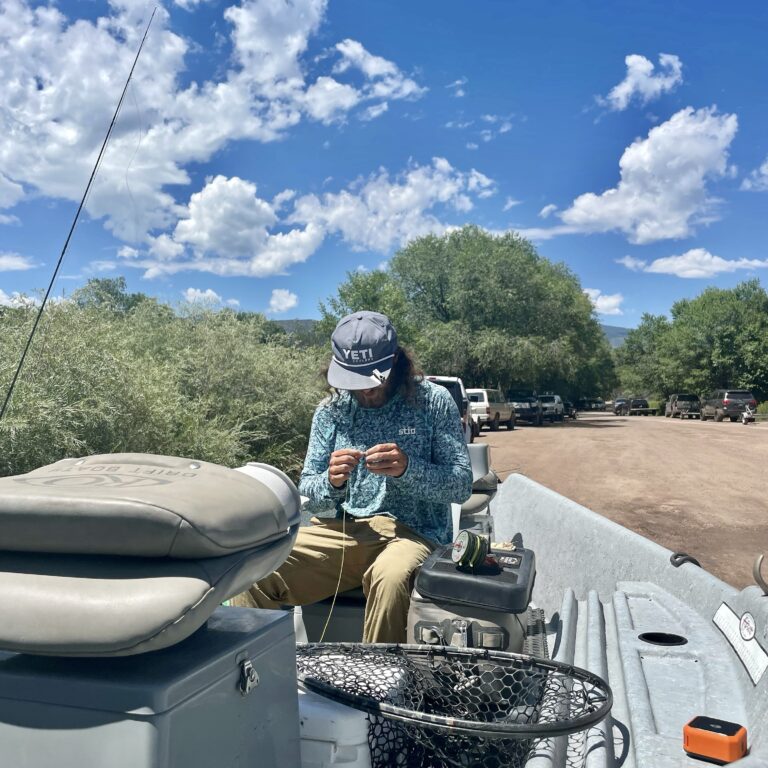
As a guide, it’s my job to make sure that my clients have the best experience as possible. It’s true that you’re not going to have ideal conditions every single day. However, there’s a fine line between dealing with tough conditions versus dealing with extremely tough conditions.
I’ve pushed the envelope enough to know that fishing dirty water can be unproductive despite throwing everything but the kitchen sink at the fish. Some days it’s simply not worth it.
Here’s a couple of things I consider when deciding to give it a go:
- Are conditions improving or worsening?
- if worsening, I would forgo
- Are flows rising or dropping
- dropping flows I’m more likely to give it a go than increasing flows
- What section of river is the cleanest?
- if you can fish a cleaner section downstream, that may be the way to go.
- What is the water temperature?
- often dirty water is warmer and will result in less oxygen in the water making the fish less likely to eat
In short, if there’s visibility on the banks and the water temperature looks good, more often than not, I’ll give it a go. However, if the fish are not holding on the bank structure, it gets really tough. That’s exactly what I ran into earlier this week on the Colorado River and it made for two long days out there.
How to Fish Dirty Water
If you do decide to fish the dirty stuff, you’re going to have to get creative and pull out all the stops. Here’s some tips that might help you put a fish or two in the net even in the dirtiest water:
- Size up your bugs
- Go heavy
- Junk Flies (i.e. worms, mops, large profiled bugs)
- Bright & dark colors (i.e. chartreuse, pink, purple, red, black)
- Find the cleanest water possible, most likely near the banks
- don’t over think it but get creative
You don’t have to worry about using size 22 midges during times of dirty water. You’ll have better luck with the larger, brighter, and heavier flies, hopefully.
So, Should You Fish It?
I mean “you don’t know until you go.” However, after fishing dirty water a few times, you’ll most likely know. Finding out the hard way isn’t always a horrible way to learn. In fact, getting your butt kicked is a solid rite of passage.
Take all of this with a grain of salt, as everybody of water can have its nuances. Some areas may have dirty water more often and can fish better than others.
Rivers like the Lower Colorado are notoriously finicky and any little thing that’s off can make fishing difficult, even for a guide who’s spent countless days out there.
0 Comments