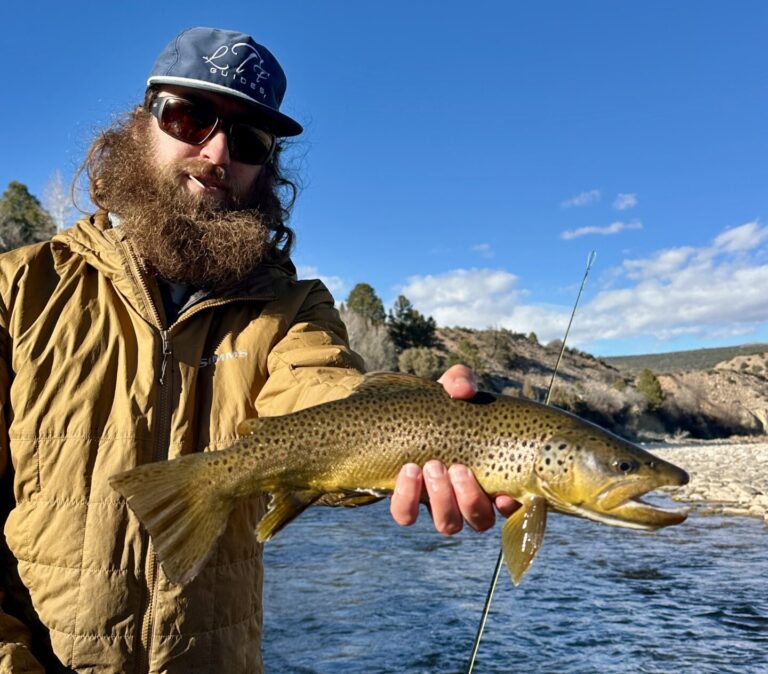
Fly Fishing Colorado River in Spring
Spring fly fishing on the Colorado River is a season of change—rising flows, shifting water temps, and the first hatches of the year put the trout in a feeding mood. This is one of the most rewarding times to fish this river, but success comes from understanding the conditions. These four tips will help anglers stay ahead of the curve and make the most of early‑season opportunities.
- River Flows
- Spring Hatches
- Know the right rig to fish
- Cover Water
Fishing is so dependent on conditions. During stable, relatively unchanged conditions you can expect fish behavior to remain consistent. When things change, such a drop in temperature, incoming storm, or big fluctuation with water levels, you can expect to fish to react to those changes. During the spring, there’s a lot of change happening so being in-tune with what’s going on with the weather and along the river, can certainly make or break your day on the water.
Watch the River Flows
Knowing the river flows is one of the most important pieces of information an angler can have on the Colorado River, especially in spring, because flows dictate where trout hold, how they feed, and what techniques actually work. Flows change the river’s entire personality—depth, speed, clarity, temperature, and structure all shift with even small bumps or drops.
It’s the early part of March and we’re certainly pre-runoff. The river is still low and clear, but the days are getting longer and temperatures are gradually increasing. I was out on the river yesterday and saw one the first big Blue Wing Olive hatches.
Despite having a lot of bugs flying around, there was only fish eating on the surface in a couple of different sections of river. That tells me that we’re in a winter/spring transition, where a lot of fish are still in their winter holding spots eating subsurface while there’s fish starting to move into shallow water to feed on the surface.
How Flows Change Trout Behavior
Trout are energy economists. Their entire survival strategy revolves around spending as little energy as possible while taking in as many calories as they can. When flows rise and the river speeds up, trout slide into softer water because holding in fast current burns too much energy.
When flows stabilize and water temperatures climb into the high 40s and low 50s, trout start to feed more aggressively and move into shallower, more accessible water. When flows drop, trout often become more selective because the river becomes clearer and they have more time to inspect food.
Knowing the flows gives you a window into trout metabolism, feeding behavior, and movement patterns—three things that directly determine your success.
How Flows Shape Your Strategy
Flows determine everything from fly weight to leader length to where you put the boat. Higher water requires heavier rigs, longer leaders, and more deliberate boat control to stay in the soft water where trout are holding. Lower, clearer water demands lighter presentations, smaller flies, and more precise drifts.
Flows can even effect hatch timing. The Blue Wing Olives can start popping off with or without a bump in flows. For the hatch, it’s more water temperature dependent. However, water temperature can be influenced by river flows. Stable flows during this time of year can help water temperature increase ever so slightly, as the sun stays out longer each day. As spring matures and flows bump up, the snowmelt coming down from the high peaks can chill the water down initially.
Generally speaking, as flows drop, you can expect an increase in water temperature. When flows increase, you can expect a decrease in water temperature. Of course, there’s several other factors at play here but that’s a good rule of thumb for the springtime.
When you track flows daily, you’re not just fishing conditions—you’re fishing the trend, which is where consistency comes from.
Pro Tips:
If flows are still low, like they have been all winter, you know that runoff hasn’t started and the water is going to be clear. Most fish are likely to still be holding in the slower, deeper runs. When you start to see the flows rise and fall each day, you know that runoff is knocking on the door.
Is the water level high enough to float? Now, this is going to take some prior knowledge about what flows are floatable and not. If you’re not sure, this is a perfect time to get out and look it over, especially if you can access it on foot.
Times of low water are great times to check out your fishery. You’ll see structure that’s normally under water and this will give you some great details to help your fishing. If you’ve never gone out at low water, I can almost guarantee that you’ll find something about the river that will help your fishing in the future.
You can check river flows here: Colorado River Below Glenwood Springs, CO – USGS Water Data for the Nation
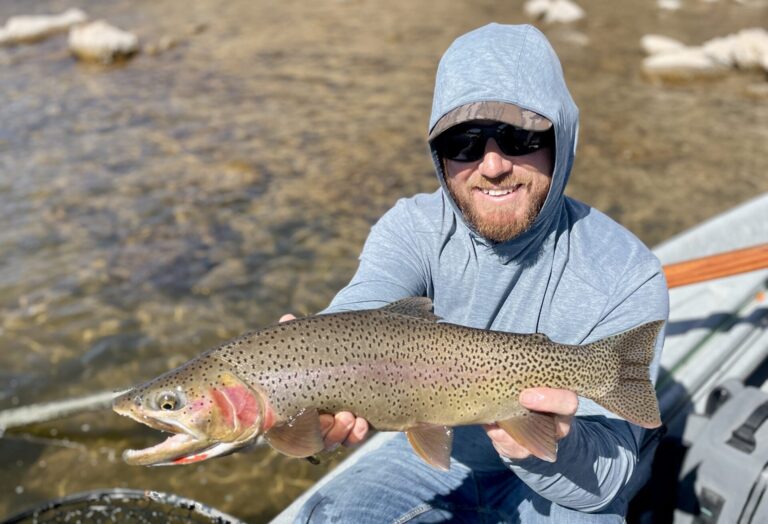
Spring Hatch: Blue Wing Olives
The Blue Wing Olive hatch is one of the most defining spring events on the Colorado River and understanding it can turn a good day into a great day. BWOs—primarily Baetis species—are small, cold‑water mayflies that thrive in the shoulder seasons when the river is still waking up from winter. This is the first big hatch of the year and signifies that spring is here and it’s time to fish!
Blue Wings hatch in cooler water, around the mid-40 degree mark. Cloudy and overcast days are what they prefer but don’t be surprised to see them on blue bird days as well. However, you’ll most likely see more fish eating on the surface during the cloudy, overcast days as this gives fish more confidence to feed in the shallows without as much chance from being an eagle’s lunch.
Trout will key in on BWOs because they’re really the only hatch going on other than midges, but the fish have been eating midges all winter and are happy to diversify their meal choice.
What Triggers a BWO Hatch
As with most things fishing, things need to be just right for the hatch to get going. The biggest thing to look for is the water temperature. Once the water temperature consistently hits the mid-40’s, the hatch will become consistent.
Cloud cover and humidity can really help initiate the hatch, as the Blue Wing Olives prefer the darker skies. If there’s a little rain in the air, all the better! Bring your rain jacket and your layers because when it’s drizzling rain that can be the best BWO fishing of your life!
How Trout Respond to BWOs
The Blue Wing Olive hatch is also unique in the way that trout choose to feed on them. Many times you’ll see a lot of bugs flying around but no trout eating on the surface. This will happen especially on blue bird sunny days. That doesn’t mean the trout aren’t feeding on them, however.
Sometimes trout key in on a certain stage of the BWO hatch, often choosing to eat emergers in the mid-water column instead of on the surface. Often times, trout will feed on the nymphs on the river bottom to start the day. As the insects rise, so do the fish.
This progression creates a layered feeding structure in the water column. Anglers who understand this can adjust quickly: deeper nymph rigs early, then lighter setups, then dry‑dropper or single dries as the hatch peaks.
The Blue Wing Olive hatch is more than just a spring event—it’s the moment the Colorado River comes alive again. It signals the start of seasonal insect cycles, wakes up trout that have been conserving energy all winter, and offers anglers a chance to fish with precision and purpose. When you understand how BWOs interact with flows, weather, and trout behavior, you unlock some of the most rewarding fishing of the year.
Know the Right Rig to Fish
As mentioned above, the warmth of spring triggers insect movement. You’ll need to be prepared to fish deep, as well as fish on the surface this time of year. The dry fly bite can be real hit or miss but you don’t want to be caught without your dry fly repertoire if you’re seeing heads on the surface.
My gameplan for this time of year is have 2 or 3 rods. (Much easier to do in a boat, which is how I normally fish) The first rod I’m rigging up is a nymph rig setup:
Nymph Rig
- 5/6 weight rod with floating line
- 9-10′ leader
- 2-3 flies underneath a barrel swivel
- small to medium bobber
Dry Fly Rig
- 5/6 weight rod with floating line
- 7-9′ leader
- 1 dry fly, most likely a BWO pattern
- don’t forget the floatant!
Streamer Rig
- 6 weight rod with intermediate sinking line
- 4-6′ leader
- I’ll beef up the tippet on the streamers to straight 15 or 20 lb.
There will be an upcoming video to explain the aforementioned rigs further so be sure to come back and watch that.
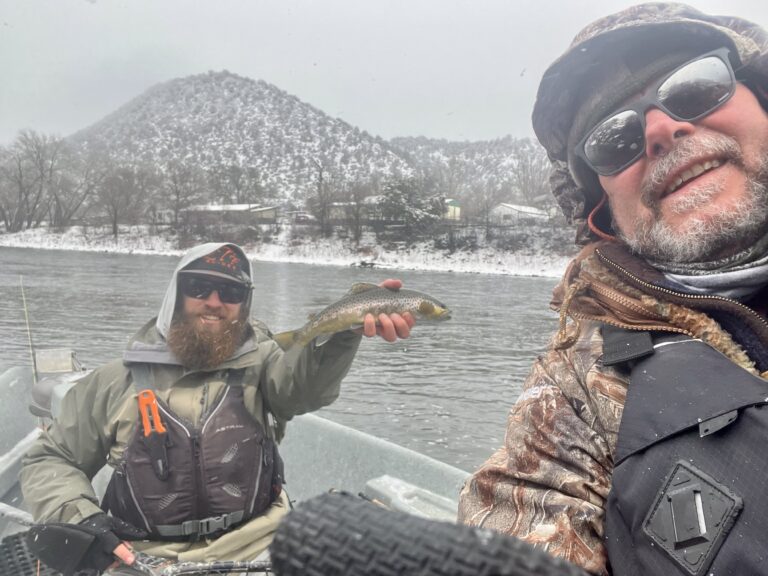
Cover Water
Don’t be afraid to cover water. During the spring, the fish aren’t everywhere. They may still be in their winter holding, deeper pockets. That’s one thing you can count on is finding fish in the slower, deeper runs, especially in the tail outs of those runs.
If on foot, I’d try to find the slower, deeper runs to focus my time on. Unless, of course, you see fish rising to Blue Wing Olives in 4 inches of water (saw this yesterday by the way) but that goes without saying.
Personally, I think the best way to fish is from a boat. You get to cover a lot more water and can find fish eating different things in the different sections. Covering more water hedges your bets a bit and gives you more opportunities; it also gives you a lot of information on fish behavior, which becomes more valuable with the more information you get.

Fishing is always a puzzle to solve but that’s what makes it enjoyable. If you want to get out and experience spring fishing but have no clue where to start, book a guided trip with us! We have all the gear you need, the desire to teach, and love enjoying a day on the water with those eager to learn or just experience what the water has to offer.
LTF Guides is a licensed outfitter in the state of Colorado. ROL: 696 DORA: OUT.0003745 The activities of outfitters are regulated by the Department of Regulatory Agencies (DORA).
0 Comments