Native Fish of the Colorado River Basin

When most anglers think of the Colorado River, they picture wild browns or healthy rainbows. But long before trout ever swam these waters, the Colorado River Basin was home to a lineup of native fish found nowhere else on Earth — species built for big water, shifting flows, desert heat, and a river system that once ran wild.

If you follow any of the water regulatory agencies updates on flows and predictions, you’ve probably heard it mention that they’re sending water downstream for native fish populations. However, you may not realize what fish they’re talking about. In this article, we’ll highlight the native species of the Colorado River Basin. 

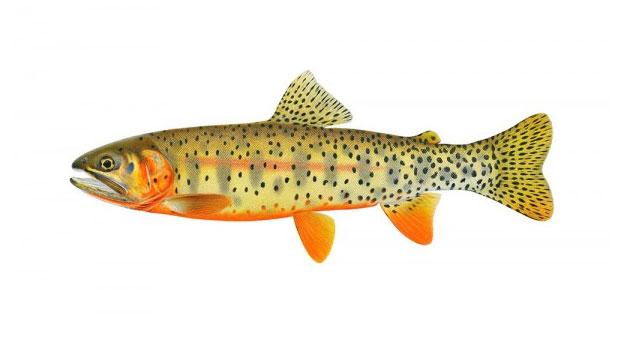
Colorado River Cutthroat Trout

Colorado River Cutthroat Trout
Photo Courtesy of Colorado Parks and Wildlife Website

The only trout native to the upper basin, Colorado River cutthroat are the original salmonids of the Rockies. Their range once stretched across high‑country streams from Wyoming to the San Juan Mountains. Nowadays these cutthroat are only found in small, cold bodies of water. There’s a few lakes on the Grand Mesa that have them thanks to stocking from Colorado Parks and Wildlife. 

They are a beautiful fish with their distinct orange slash under their throat, gold and copper coloration with a unique spot pattern. It’s a shame that they are no longer found in the major rivers of the Colorado River Basin (i.e. Colorado, Gunnison River, etc.). [1] You can still find this fish in various lakes of the Grand Mesa thanks to stocking efforts by Colorado Parks and Wildlife. 

The Big Four: Native Desert Fishes of the Lower Basin

These species evolved in a river that once swung wildly between spring floods and late‑summer trickles. They’re built for extremes — long bodies, large fins, and the ability to thrive in warm, turbid water.

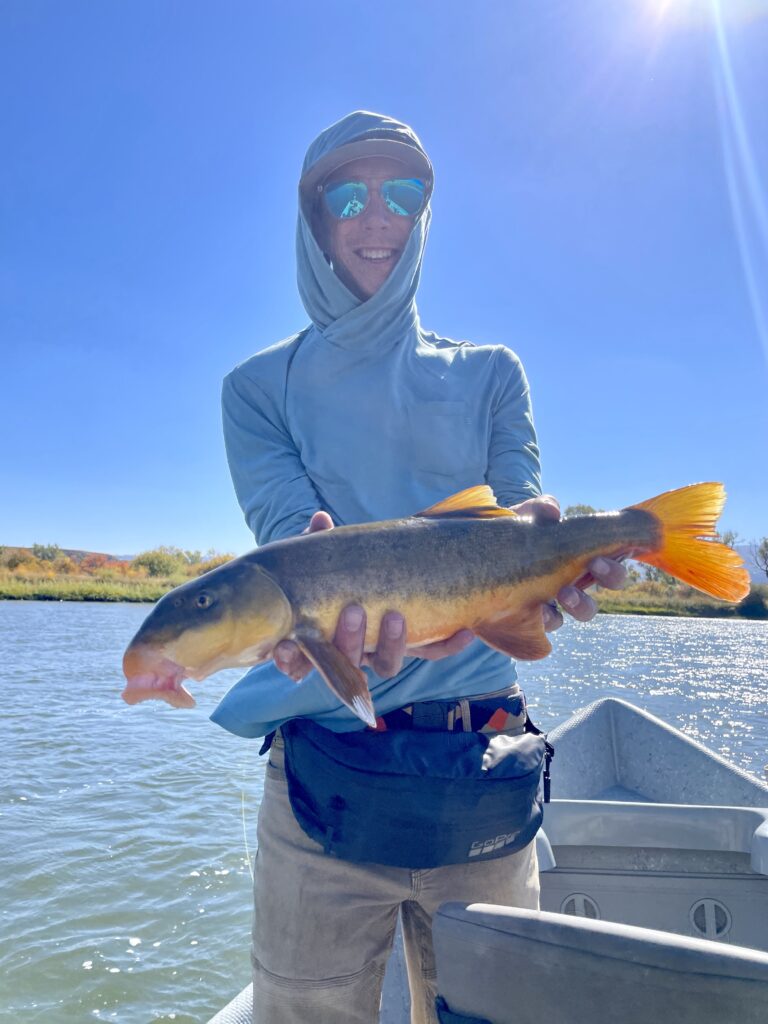
  1. Humpback Chub
  2. Bonytail Chub
  3. Razorback Sucker
  4. Colorado Pikeminnow

Humpback Chub

Photo Courtesy of Colorado Parks and Wildlife

Status: Threatened

The signature feature of the Humpback Chub is the pronounced hump behind his head. Like most animals with distinct features, this hump is not for looks but for function. The hump acts like a stabilizer, helping the fish hold position in strong, swirling current. 

These fish can grow up to 18″, making them one of the larger native minnows. These fish feed on aquatic insects as well as algae. They’re opportunistic feeders and well-adapted to the nutrient-poor, sediment heavy environments of warmer, canyon water. 

These fish are greenish-silver with pale sides, and a white belly. During spawning, males will develop red tinges on their cheeks and underside. The spawning colors really do make this species a pretty fish. [2]

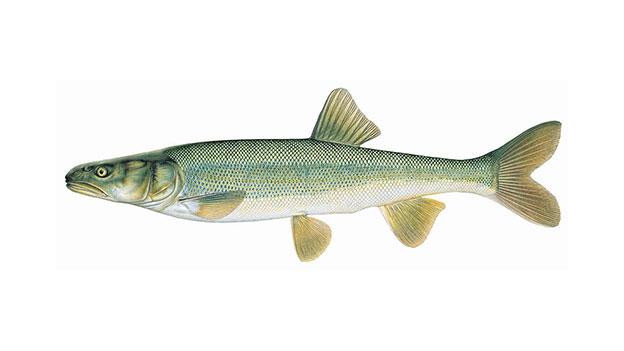
Bonytail Chub

Bonytail Chub
Photo Courtesy of Colorado Parks and Wildlife

Status: Endangered

Once abundant throughout the Colorado River system, the bonytail chub has been pushed to the edge by dams, altered flows, habitat loss, and competition from non‑native fish. The Bonytail Chub is one of the most endangered fish species in all of North America. Extinction is a serious threat and there are no known self-sustaining populations, in the wild. 

Bonytail Chubs are omnivores and eat insects as well as other invertebrates. Encountering one of these rare, native fish is a special occurrence that doesn’t happen often. If you do happen to catch one, you’re required to return it to the water, unharmed as quickly as possible.  

Bonytail Chub have gray or olive-colored backs, silver sides, and a white belly. They have a slight bump behind their head, much less pronounced as compared to the humpback chub. The dead-giveaway about these fish are the small, pencil thin areas just in front of the tail. These fish can grow up to 22 inches and live up to 50 years. [3]

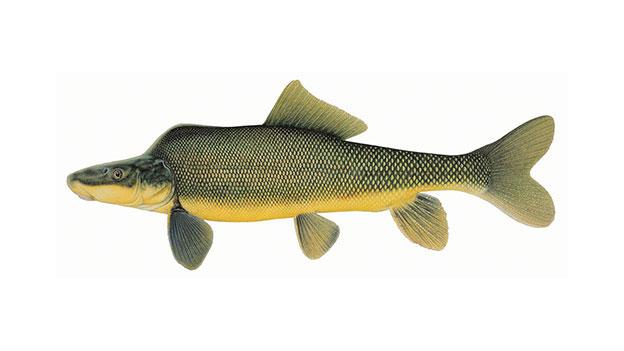
Razorback Sucker

Colorado Razorback Sucker
Photo Courtesy of Colorado Parks and Wildlife

Status: Endangered

The Razorback Sucker has been part of the basin for a very long time, surviving floods, droughts, shifting channels, and the kind of desert extremes that would wipe out most fish. Today, it’s federally endangered — but still hanging on in pockets of the system where the river remains wild enough to support it.

These fish eat insects as well as animal matter. The Razorback Sucker can grow up to 15 pounds, reach up to 30″ in length and live over 40 years. They have a bronze / yellowish color, a long, streamlined body, and a sharp, bony dorsal fin that gives them the Razorback name.

Very small reproducing populations exist in the wild, one of which is an off-channel pond in the Colorado River near Grand Junction. These fish are most often found in quiet backwaters along the river. [4]

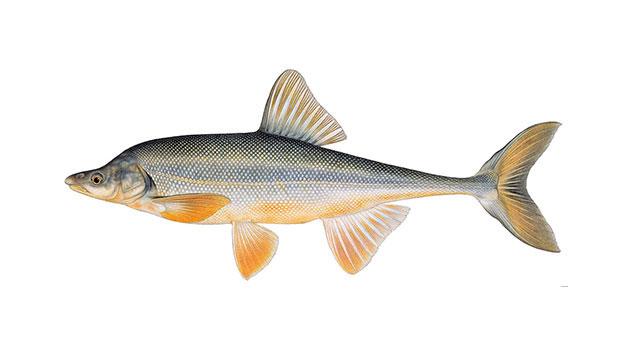
Colorado Pikeminnow

Colorado Pikeminnow
Photo Courtesy of Colorado Parks and Wildlife

Status: Federally Endangered, State Threatened

Before trout, before dams, before the river was carved into reservoirs and tailwaters, the Colorado pikeminnow ruled the system. This fish wasn’t just another native minnow it was the top predator of the entire Colorado River Basin, capable of reaching lengths that sound like folklore today.

The Colorado Pikeminnow is the largest minnow in North America and historically, one of the largest freshwater predators in the West. There are recordings of these fish growing up to 6′ in the length and 80 pounds, a true river monster. Their long, torpedo‑shaped bodies and powerful tails are built for long migrations and fast water. They’re sleek, efficient, and perfectly adapted to the pre‑dam Colorado River.

Young Pikeminnow feed mostly on plankton and insects. However, once they reach adulthood, their diet shifts to mostly other fish. Colorado Parks and Wildlife also notes that Pikeminnow have also been known to eat mice, birds, and even small rabbits. 

The Colorado Pikeminnow is known to migrate more than 200 miles, which is a big reason for their decline today. Dams and lower river flows have greatly affected their migration patterns and disrupted their reproduction success. 

Colorado Pikeminnow once lived throughout the main stem of the Colorado River and most of its major tributaries. Today, only two wild populations are found. One of the populations exist in the Upper Colorado River basin and the other one in the Green River system. The San Juan River Basin Recovery Implementation Program stocks Colorado Pikeminnow to develop a separate, self-sustaining population​. [5]

Flannelmouth Sucker

If there’s a native fish that quietly keeps the Colorado River running, it’s the flannelmouth sucker. They don’t get the glory of trout or the mystique of the desert “Big Four,” but they’re one of the most important and resilient native species in the entire basin. These fish have been here far longer than any salmonid, and they’re still holding on in many of the same waters I guide today.

The Flannelmouth Sucker are native to the entire Colorado River Basin and are still found frequently on stretches of the Colorado River. These fish feed on algae, insects, small invertebrates, and organic material they scrape off of rocks. Their feeding helps cycle nutrients and maintain healthy river ecosystems, a role that should be more appreciated than it is. [6]

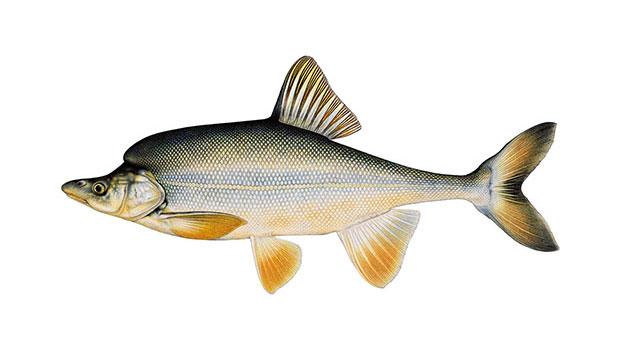
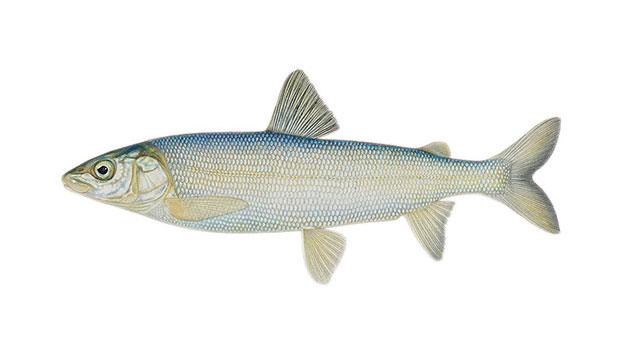
Mountain Whitefish

Mountain Whitefish
Photo Courtesy of Colorado Parks and Wildlife

The Mountain Whitefish is one of the most underappreciated native fish in the Colorado River Basin — and one of only two salmonids truly native to Colorado. Long before browns and rainbows were stocked, whitefish were thriving in the cold, clean rivers of the state’s northwest corner. They’re tough, they’re sensitive, and they’re far more important to the ecosystem than most anglers realize.

The Mountain Whitefish have a dark blue / silver back, silver sides that give way to a white belly. Their mouth is on the bottom of their face. They have a small head in relation to the rest of their body. [7]

I get more philosophical about the Mountain Whitefish in a previous blog. You can check it out below. 

Whitefish

Whitefish Can’t Jump, or Can They?

I’ve never gone out and specifically targeted Whitefish, but I’ve never minded when I found them on the end of my line. I think Whitefish are an underrated species and should be more respected. In this article, I give the Mountain Whitefish its due. 

Read More »

The native fish of the Colorado River Basin aren’t just biological footnotes — they’re the living history of this watershed. These species have survived good years and bad years with floods, droughts, decreasing migration paths and habitat long before anybody stood from a drift boat and through a line in. They are a special part of the ecosystem and deserve more respect. 

The diversity of the Colorado River Basin is truly impressive. With the introduction of Rainbow, Snake River Cutthroat, and Brown Trout, the waters are home to over a dozen different species. We’re privelaged enough to have this watershed right in our backyard and have the ability to meet these native species, who have been here longer than humans, in person. 

As anglers, we get a front‑row seat to this story every time we step into the water. And with that privilege comes responsibility. Protecting native fish just means understanding the full picture of the river we depend on. It means respecting closures, supporting habitat restoration, fishing responsibly during warm, low‑water periods, and recognizing that a healthy trout fishery starts with a healthy native fish community.

Resources

LTF Guides

LTF Guides is a licensed and insured outfitter in the state of Colorado, operating on the Colorado and Roaring Fork Rivers. DORA: OUT.0003745. ROL: 696

Categories: Fly Fishing

0 Comments

Leave a Reply

Avatar placeholder

Your email address will not be published. Required fields are marked *