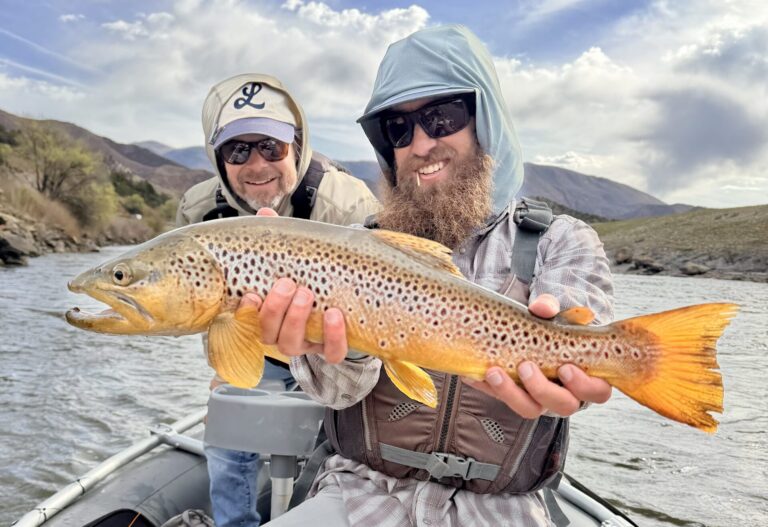
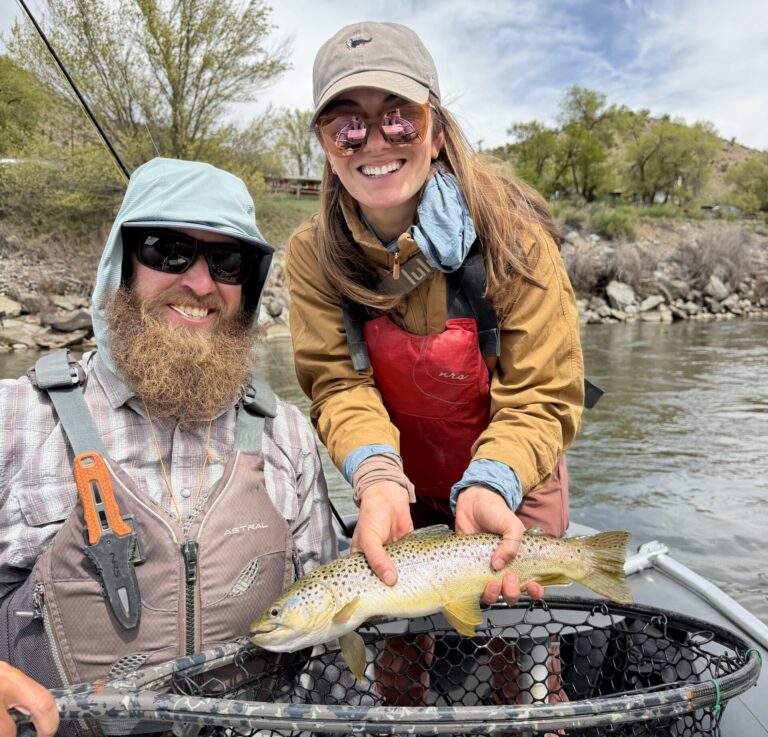
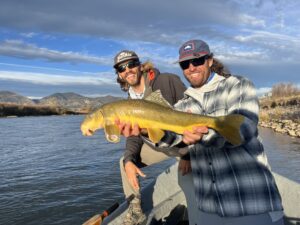
Brown Trout on the Colorado River

This past week I’ve seen an abundance of caddis flies flying around. The Blue Wings and Midges are still around but have certainly taken a backseat to the Caddis. Typically, this time of year we’re smack-dab, in the middle of runoff and the rivers are high and dirty. That’s not the case this year and we’re taking advantage of these early Caddis Hatches! 

Three Stages of Caddis that Catch Fish

Larva Stage

Caddis spend most of their lives as larvae clinging to rocks, spinning webs, and biding their time before they can rise to the surface and hatch. These are available to the trout year-round.

Patterns: Walt’s Worm, CZ Caddis, Wire Caddis Larva

How to Fish: Deep nymph rigs, riffles & seams, drop them off shelves

Guide Tip: most often this stage is best fished well before the hatch, so start with the larva stage in the early mornings and be ready to switch when you start seeing bugs come off the water

Pupa Stage

The Pupa stage is probably going to be your most product stage to fish. Pupae swim fast and try to get up to the surface as quickly as possible, in order to hatch into a winged adult. The fish know that these are quick bugs that can get away so you’ll often see fish move quite a ways to grab their meal. When you see quick, splashy rises, you can bet that those fish are eating caddis and most likely eating them in the pupa stage. 

Patterns: Duracell Jig, Soft Hackle Pheasant Tail, 

How to Fish: These work great under a dry dropper 2-4′ under the surface

Guide Tip: don’t be afraid to let these swing at the end of your drift, that will often illicit a strike if fish are eating rising insects

Adult Stage

Everyone’s favorite stage of every hatch: the adult stage. This is when you’ll see the tent-winged bugs flying off the water and flying around the bushes, just off the river. These bugs skate, flutter, and can get stuck in the surface film. However, these bugs generally get off the surface fairly quickly, which forces the fish to not delay when eating them often resulting in a splashy rise. 

Patterns: Elk Hair Caddis, Missing Link, Foam Caddis

How to Fish: Tight to banks, in the tail out of riffles, soft edges

Guide Tip: don’t be afraid to put a little action on these adults, skating these dry flies can be an extremely productive and fun way to fish

When to Expect Caddis around Western Colorado

On typical years, spring runoff usually interrupts the first caddis hatches of the year. However, this year, we’re able to take advantage of these hatches and it’s been pretty good! There’s never a bad time to fish caddis, as they are around and available to trout year-round. However, the month of April kicks off the caddis season which runs well until the fall. 

Mother’s Day Caddis is a common thing that you’ll hear and as previously mentioned, that hatch usually coincides with high, dirty water from snow melt. However, this year may lend itself to one of the best Mother’s Day Caddis fishing in recent years. Don’t miss it! 

How to Fish the Caddis Hatch

When fish are eating caddis, it won’t be hard to tell. The rises will be a bit more splashy, fish will be willing to move a bit more than usual, and you’ll probably see a lot of bugs flying around the riverside bushes. Here’s a few quick tips on how to be successful when fishing a caddis hatch:

  1. Target shallow, quick riffles. Caddis really thrive in fast, oxygenated water and so do trout. Perfect match. 
  2. Focus on adult & pupa stages. A dry dropper rig with an adult caddis and an emerger below it can be a great rig to catch fish when the caddies are out. 
  3. Add movement. If the dead drift isn’t working, put some action on your flies. Little twitches and pops can represent the natural movement that these bugs have when they swim up to the surface and hatch. 
  4. Fish evenings. If you’re really wanting the dry fly action, you’ll want to be there later in the day. This is typically when the most adults return to the water and lay their eggs. This is when the trout really focus in on the adult caddis flies. IMPORTANT NOTE: make sure you check water temperature and don’t fish if water temps are too hot. 

Caddis are a staple in any trout’s diet. Caddis are abundant and typically, pretty reliable as they are very active for much of the early summer into fall. You certainly don’t want to find yourself on the water with a good amount of caddis flies in your fly box. From deep nymphing to skating dry flies, the caddis hatch is one you want to be prepared for and not miss! 

Did you enjoy this article? Here’s a couple of more that we think you’ll enjoy:

Native Fish of the Colorado River Basin

Native Fish of the Colorado River Basin

When most anglers think of the Colorado River, they picture wild browns or healthy rainbows. But long before trout ever swam these waters, the Colorado River Basin was home to a lineup of native fish
Read More »
Fly Fishing the Colorado River

Blue Wing Olives

When spring rolls into Western Colorado, anglers start watching the skies — not for sunshine, but for clouds. Because when the weather turns moody, the Blue Wing Olives (BWO) begin their quiet takeover. These tiny,

Read More »
LTF Guides

LTF Guides is an outfitter and guide service based in Western Colorado. We guide the Lower Colorado River, the Roaring Fork River, the Gunnison River, and Vega Lake. DORA: OUT.0003745 ROL: 696. 

Categories: Fly Fishing

0 Comments

Leave a Reply

Avatar placeholder

Your email address will not be published. Required fields are marked *