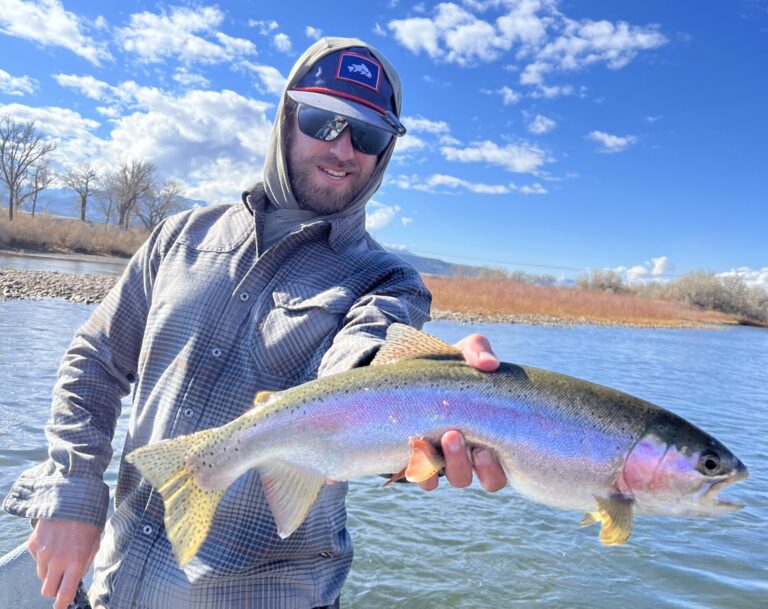
The Colorado River is a big, dynamic piece of water. It changes with every season, every weather shift, and every release upstream. To fish it well you need gear that’s built for power, reach, and versatility. This isn’t small‑stream fishing. The Colorado rewards anglers who show up prepared.
Fly fishing is a gear intensive sport, which is a big part of why many people love it. We love gear too, but it can quickly become overwhelming with all the different brands, types of rods, fly lines, tippet, flies, etc. In this article, we’ll cover what you’ll need to have a successful day on the Colorado River.
Essential Gear
Fly Rods
The Colorado River demands rods that can handle medium to short casts, heavy rigs, and wind. Most anglers are best served with a 9′ 6-weight rod. This size of rod is versatile for nymphing deep runs, throwing dry-droppers at the banks, and streamers. If you want 1 rod to do it all on the Colorado River, the 9′ 6-weight is our top pick!
Budget Friendly: Fenwick Eagle Fly Rod
This was similar to my first fly rod and I caught a lot of fish on it before upgrading. Don’t sleep on the “Cabela’s Special.”
Best Bang for Buck: TFO Pro III
I have 3 of the Pro II that I have used over 200 days in the past 4 years. They’re durable and have great feel for such a moderately priced rod. They even sell replacement segments if you find yourself on the wrong end of a mishap.
High End: Scott Centric
This is an all-around great rod and I feel comfortable fishing it under all sorts of circumstances. Hell, you could even use this on the skiff down in Texas hunting redfish! You’ll have to visit your local fly shop to purchase this stick. We would recommend Western Anglers in Grand Junction, CO or Galveston Fishing Company down in Texas.
Fly Reels
When it comes to trout fishing, reels are the least of my concern. It’s rare to fight a trout on the reel, where you’d need a good smooth drag. Nowadays, even the most budget friendly reels can get the job done. I wouldn’t spend much time worrying about getting a fancy reel, as it serves as a line holder for the most part. Get a reel that’s durable and one you’ll enjoy looking at.
Best Bang for Buck: Redington Behemoth
This was my first upgrade from the “Cabela’s Special” rod/reel combo I originally fished with. I still have it to this day and works great. You’ll find it on my guide reels quite often.
Fly Lines
Fly lines are another area that I wouldn’t get too worked up about but, I would opt for a solid line, as cheap fly line make casting & mending more difficult. In my opinion, Scientific Anglers is at the forefront of fly lines these days.
For dry fly fishing and nymphing you’ll want a floating line. When fishing streamers, I like moderate sink intermediate tip, especially for spring fishing. Many times the fish are holding in the runs, behind structure and that intermediate sinking line will put your fly right in front of the fish.
Floating Line: Amplitude Smooth Infinity
This is the fly line I’ve used on all my guide sticks for the previous 4 years and when it’s time to replace, I’ll be getting this one again.
Sinking Line: Sonar Titan Sink Tip
I’ve used this on my streamer sticks for the past couple of seasons and have enjoyed them. Even got some for my pike fishing setups.
These are certainly not the cheapest options out there but I’m not a big fan of cheap fly lines, as they break & crack much easier than quality. In my opinion, fly lines are in the conversation of most important piece of gear.
Pro tip: You can get a double tapered line, which is like getting two for one. When the front end wears down, just take it off and use the end that was on the reel at the front. SA offers the Amplitude Smooth Infinity in a double taper as well.
Leaders and Tippet
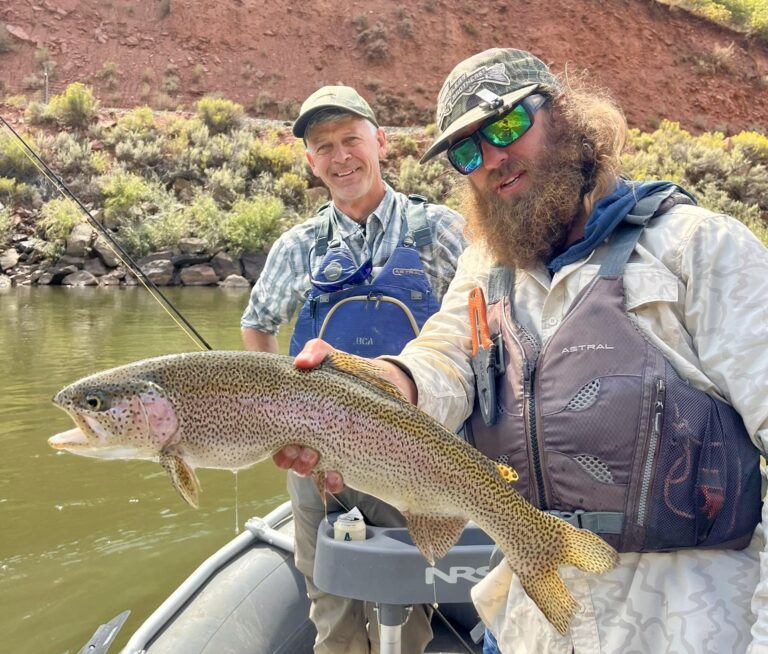
The Colorado is a big river with big currents and big fish. Having the right leader set up is crucial to your success. The Colorado River changes depth and speed constantly, so you need a range of leader setups.
The go-to leader for the Colorado River is the 9′ 3X but having leaders from 2X to 4X are good to have on hand. Even during the spring, when the water is crystal clear, I’ll rarely drop down below 4X. For the most part, the fish aren’t overly leader-shy and you’ll be happy you’ve got the beefier tippet on when an angry rainbow pulls that fly line out of your hand.
If you’re fishing some small BWO emerger patterns, it may be necessary to size down to 4X. It’s extremely rare that you’ll have to size down to 5X. In most cases, a fly change or change of depth will turn your day around. And sometimes, it’s just a tough day out there; it is a freestone after all.
I’ve started fishing nylon tippet exclusively and haven’t looked back. In my experience, I haven’t noticed much of a difference when fishing fluorocarbon. That goes for dry flies and subsurface; I’m just not convinced that fluorocarbon is better but perhaps, that’s conversation for another time.
Bobbers and Splitshot
That title sounds like a pretty good band name, but I digress. Nymphing on the Colorado River can be the most productive way to fish, especially in the early spring. You’ll want to have medium to large size bobbers (AKA indicators), splitshot, and barrel swivels.
Bobbers and splitshot are obvious but I’ve really become a fan of the swivels. You can stack splitshot on top of it quickly adding more weight to rig without weakening your leader with knot. However, where the swivels really shine is preventing twist on multiple fly rigs, which reduces tangles.
Less time fixing your tangles more time fishing: no brainer!
Flies that Consistently Produce
The Colorado River has a lot of bug life, which is exactly what trout need to get big and strong. As anglers though, every day is a challenge to figure out what they’re eating.
Nymphs:
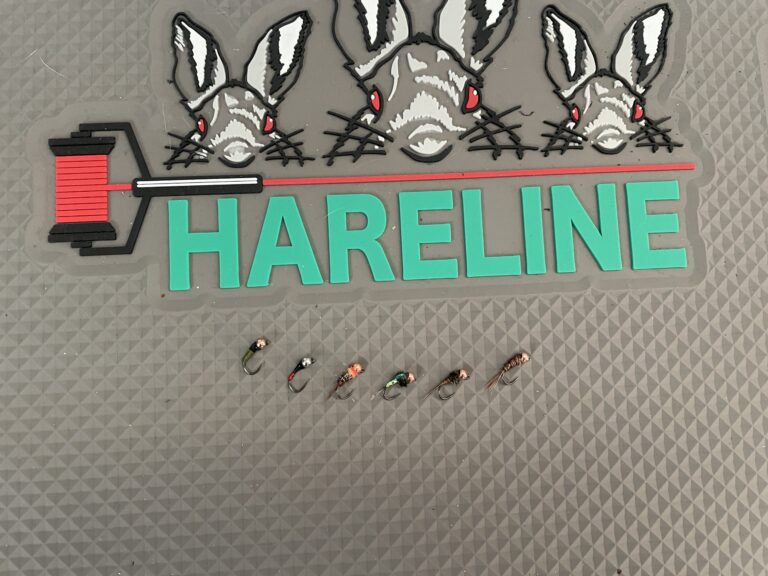
Pheasant Tails. Good catch all patterns that imitates a lot of different insects subsurface. Fish in size 14, 16, 18, 20. Lot’s of variety with this pattern so don’t be afraid to try a different version before completely switching.
Two Bit Hookers. Most effective when the BWOs are around. This pattern can be fished on the bottom or up in the water column, just depends on where the fish are feeding. Fish in size 14, 16, 18, 20.
Juju Baetis. Same as the Two-Bit pattern.
RS2. When fish are keyed on baetis emergers, the RS2 really shines. Have olive, brown, black, and grey handy, as sometimes the fish can be keyed in on one color.
Zebra Midges. If you don’t happen to see any bug activity, a safe bet is to fish midge nymphs. Midges are available all year long and during transitional times, trout will feed on these when there’s nothing else available for them.
Pat’s Rubber Legs. This pattern can be effective all year round so don’t ever be shy about trying it out. You’ll know fairly quickly if there’s fish looking for these. Fish in various sizes from 2-10.
Perdigons. Various sizes and colors will work at different times. Colors to have include black, olive, orange, and purple. These flies get into the zone quickly and work great when floating past soft pockets behind rocks.
Duracell Jig. This attractor pattern has produced great results for me on the Colorado River. They’re not always effective but when they’re on, they’re on. I rarely leave the house without these in various sizes.
Dry Flies:
Parachute Adams. These flies do a great job of imitating adult baetis bugs. I’d have the following colors: olive, grey, purple in sizes 12-18.
Sparkle Dun. A versatile fly that can be used to imitate an adult Baetis on the surface if you put floatant on it. You can also forgo the floatant and allow it ride lower in the surface film. I’ve seen them both work like a charm.
Midge Cluster. What’s better than a single midge, a bunch of them, right? Well, these things don’t work as often as they should, in my opinion but it’s a good option to have in the box, as back up.
Chubbies. Big foam bugs that can imitate various different insect species from grasshoppers to stoneflies. Good idea to have an assortment of colors and sizes. Size 2 down to a 10 and colors such as purple, royal, orange, and natural.
Streamers:
Goldie. White and gold articulated fly that really stands out in the spring clarity of the Colorado River.
Ebony. Same as the Goldie but just in black.
Rusty Trombone. Similar construction to the Goldie and Ebony but this fly offers a unique color that works as both a light and dark fly. I’ve fished this pattern all over the state, in various types of weather (i.e. sunny, cloudy, etc.) and have had great success. If I have just one streamer in my box, it’s the Rusty Trombone.
Best Way to Fish the Colorado River?
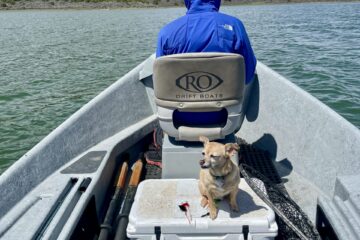
Should I walk / wade or float? For me, that’s an easy one to answer. The big water of the Colorado River lends itself to being more productive when fishing from a boat. Having said that, the absolute best way to fish is with a knowledgeable guide.
The Colorado River has a reputation for humbling anglers who don’t have an intimate knowledge of the nuances of the river. How do I know this? Because I’ve been on the receiving end of many a good butt-kickin’s on this river.
When I was first learning this river, I made all the mistakes and spent many hours out there trying to figure out the secrets of this mysterious river. After 5 years of mistakes and relentless effort, I’ve learned quite a bit. I’ve found a true passion in showing this river to others and having them witness the quality fish that these waters hold.
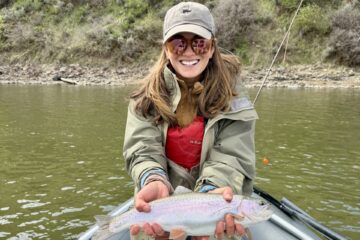
I’d love to get you in my boat and show you what the Colorado River has living in its waters.
0 Comments