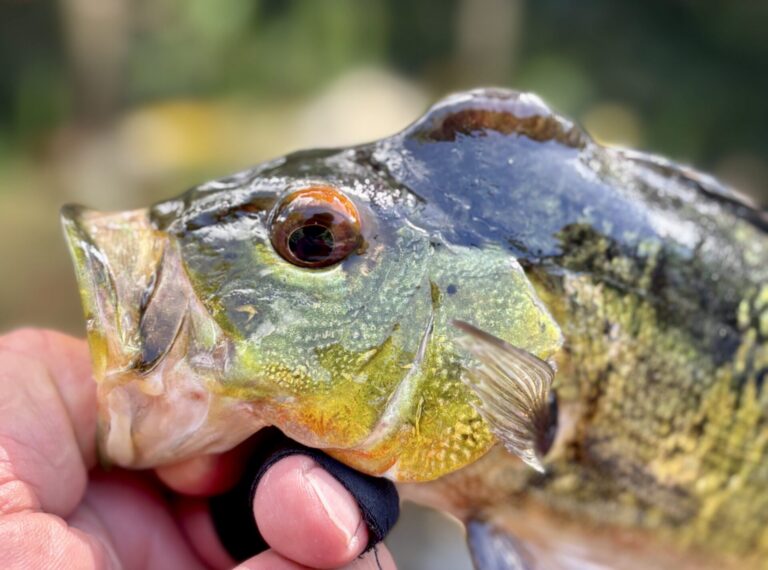
These fish aren’t just colorful; they’re aggressive, hard‑fighting, and perfectly adapted to the flooded jungle environment that surrounds the lake. For many traveling anglers, Gatun has become one of the most accessible and productive peacock bass fisheries in the world.
A Fish That Was Never Supposed to Be Here
Lake Gatun might sit at the heart of the Panama Canal, but for anglers, it’s the peacock bass—locally called sargento—that steal the show. Peacock bass aren’t native to Panama. They were introduced sometime in the 1950s–60s, likely through accidental escape from a fish farm during heavy rains or intentional stocking by U.S. personnel stationed around the Canal Zone.
According to Smithsonian research around 100 peacock bass were imported from Buga, Colombia in 1969 and stocked into a private pond for the purposes of sport fishing. Shortly after the stocking, several fish escaped from the pond likely during heavy seasonal rains or unknown drainage connected to the Chagras watershed.
Whatever the origin, the species took hold quickly likely due to the stable tropical water, endless habitat structure, abundance of bait, and no natural predators. They certainly reshaped the lake’s freshwater ecosystem, wiping out almost 60% of the native fish species. There is no doubt that the Peacock Bass are the apex predator in the lake.
Species of Peacock Bass in Lake Gatun?
Probably unknown to most, peacock bass are technically cichlids, not true bass, which explains their explosive strikes and relentless power. They crush topwater poppers and plugs, chase down jerkbaits and gurglers, and hammer jigs and streamers pitched into timber. Even smaller fish fight above their weight class, which puts a nice bend in a 6 weight.
In doing some research, there seems to be some confusion on what species of Peacock Bass inhibit the lake. In talking with the locals, it is believed that the Cichla ocellaris strain or the “butterfly.” Their typical size is the 3-5 lb range but can get much larger.
Head guide of Gatun Sport Fishing, Gerardo Duran, says that the largest he sees in the lake is around 7-9 lbs. He believes it’s because there is no regulation on size or number of fish people can keep and the Sargento are definitely on the menu for the locals.
When a big fish is taken out of the ecosystem, it takes several years for it to be replaced and it’s clear that the big fish are being taken out of the lake faster than they can grow. Several tournaments on the lake are “kill tournaments,” which requires fish to be brought in to be weighed and ultimately harvested.
Why Lake Gatun Became a Peacock Bass Hotspot
Lake Gatun was formed when the Chagres River was dammed during the construction of the Panama Canal. The result: a massive, structure‑rich reservoir filled with flooded timber, creek mouths, points, and endless ambush zones—perfect habitat for an aggressive predator.
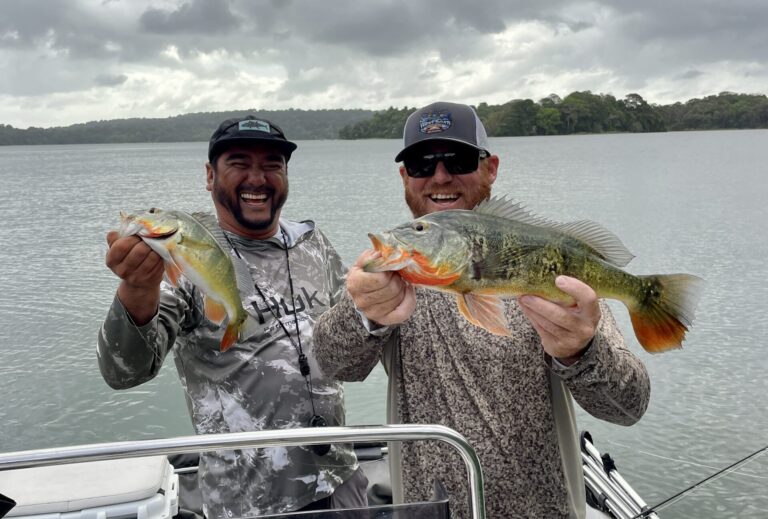
These bass love the structure of downed trees and logs where they can hide and ambush their prey, as they swim by. These fish are also very territorial so any disturbance in the area, they’ll come out to investigate. A great way to feed these aggressive fish is with a top water popper or gurgler. Small baitfish imitations work extremely well, especially as the day matures and sun gets high in the sky.
Best Time of Year
The lake’s calm water, short runs, and year‑round tropical climate make it a reliable fishery all year long. The weather is fairly consistent throughout the year, but they do have a rainy season (May-October). During this time of year, the lake fills up with the rain, which allows the bait to spread out and forces the Peacock Bass to be more aggressive towards their prey.
We witnessed this behavior last month on our trip to Lake Gatun. The water level in the lake was extremely high and scattered the bait out quite a bit. I would imagine that high lake levels make the fishing a bit more challenging and it does because it’s difficult to fish all the structure because the water level is in the trees. However, we found plenty of fish so don’t let the high-water levels scare you off.
Prime time is considered December through May, which works out great for folks in the United States. November through February can be a tough time for anglers in colder destinations, which makes considering a trip to a warmer climate a great idea.
Honestly, there’s not a bad time to visit Panama and fish Lake Gatun. It’s a true year-round fishery, with stable water temperatures, no closed seasons, and great action. There is endless spots that hold fish and the veracious nature of these fish keep them hungry all the time.
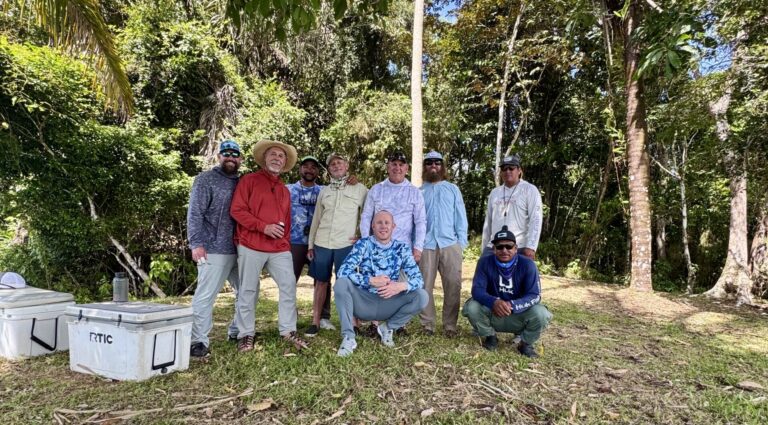
Join us in Panama in January 2027 and get a good look at this impressive fish species up close and personal. Dates will be released soon!
0 Comments