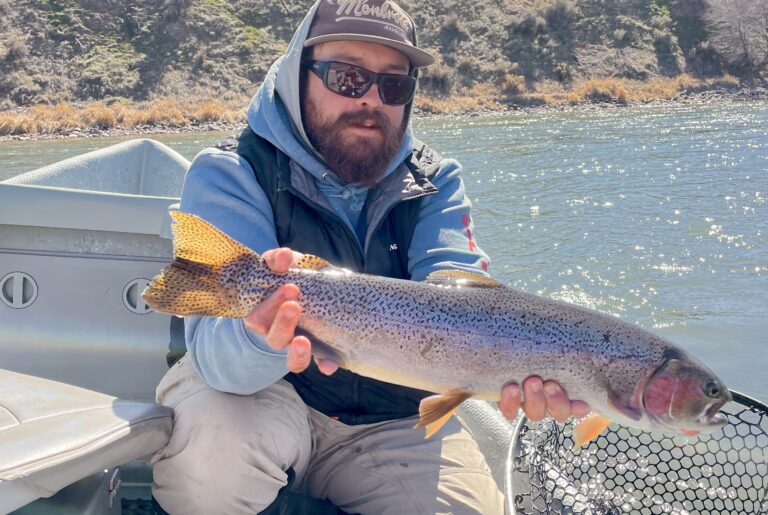
Summertime is here. By now, I’m sure you’ve seen all the doom and gloom articles about the water in Colorado drying up. It’s true that our poor winter snowpack left us with less water this summer, but I don’t believe it to be as bad as the talking heads on the news are saying.
It certainly was a warm spring and the fishing overall was pretty good. I hope you’ve been able to get out and take advantage because we’ll need to make some adjustments this summer if you still want to fish in Western Colorado.
It’s all but certain we’re going to have low water conditions on our rivers this summer. In this article, we’ll discuss protecting our rivers during a low water year. Low water conditions are far from ideal, but this is the natural ebb and flow of mother nature.
As guides and outdoorsman, we understand our office is a dynamic, ever-changing environment. That means we have to adapt to whatever conditions we have and sometimes that means adapting our operating procedures to protect the resource for the long haul.
We’ve had some great spring fishing on the Colorado, Roaring Fork, and Gunnison rivers and that’s in large part of the health of the river. To ensure that we can have great fishing for years to come, we’ll need to be proactive in taking care of our waters when they are most vulnerable.
Watch Water Temperature
During low flows, water warms faster and stays warm longer. Trout are very resilient and can handle a lot, but warm water is a different story — it reduces oxygen and greatly increases stress. Trout thrive on temperatures up to around 65 degrees. Once the water gets above that, it can really take its toll on the trout.
- Carry a Thermometer
- I utilize this digital one from Fishpond
- Check temperature frequently throughout the day
- Temps may be okay in the morning but can work quickly as the sun gets high
- Check temperature throughout the season
- just because temps are good in the morning doesn’t mean the fish aren’t stressed out from dealing with high temperatures for most days for extended periods
- Stop fishing when temps reach 67 degrees
If you’re on a guided trip, trust your guide’s call. We’re not trying to shorten the day or get one over on you. We’re simply trying to protect the resource. If we do have to cut the day short from a fishing stand point, that leaves a great opportunity for some learning.
Perhaps, we can focus some time on tuning your cast, work on stack mending, reading water, etc.
Shorten the Fight
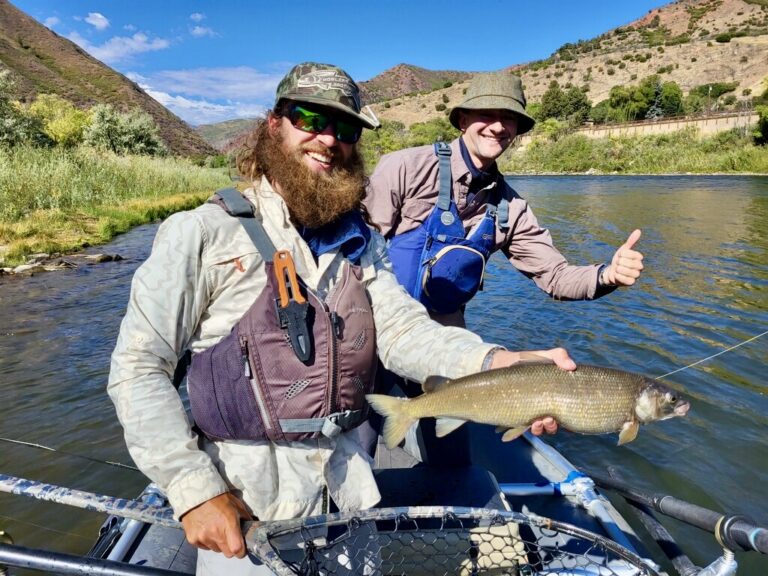
Don’t fight fish for long. Do your best to get the fish in, off the hook, and back in the water as quickly as you can. Utilize heavier tippets, fight the fish with purpose using low rod angles and steady pressure. I’ve even heard of people cutting the hooks off their dry fly and just watching the fish eat their fly with no hook. Not a bad idea if you think about it.
Keep Fish Wet
This may be the most important aspect of taking care of the trout during low water: keep them wet! This may mean forgoing the photo and keeping the fish in the water during the unhooking process and letting them go as soon as possible.
Downsize Your Impact
Respect the riverbed. During low water, it may be easier to walk across the river to access the other side. However, be mindful of what’s on the bottom of the river: insect habitat, juvenile trout habitat, redds, etc. Stomping around on these vital components to the river’s health can have negative impacts so be mindful of how you’re effecting the river.
Avoid:
- Wading through shallow riffles
- Crossing obvious spawning areas
- Dragging anchors across gravel
- Parking boats on exposed shelves
Start Early, Finish Early
Set those alarms and get out there early. You should be fishing as soon as you can see. Low water years are certainly not the time to sleep in and get a crack of noon start. Early morning is usually the best time to fish during the summertime anyway. Unfortunately, evening sessions during low water years won’t be an option, on most bodies of water. Resist the temptation for those evening sessions, once the water temperatures are too high.
Choose Your Water Wisely
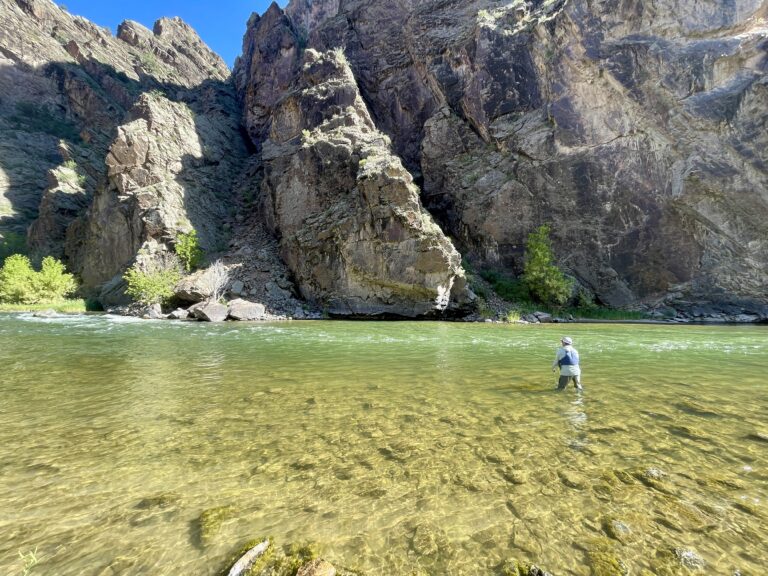
Not every stretch handles low water the same way. Some sections stay cooler, deeper, or more oxygenated. Others become bathtub‑warm and stressful for fish. The various canyons that host remote waters can be a great option. High canyon walls can keep the sun from impacting water temperatures and keep the water cool for the fish. However, be diligent and ethical and check the water temperature to ensure that it’s still safe for fishing.
Be a Good Steward, Not Just a Good Angler
Our western rivers are under more pressure than ever through drought and more people utilizing the resource. That’s not a bad thing; in fact, it can be a good thing, as long as we’re on the same page of taking care of the water. The river gives us a lot and during times of low water, it’s time for us to give back and take care of these precious resources.
When anglers and river users make smart, ethical choices, the fishery stays healthy, resilient, and productive — not just for us, but for the next generation of anglers who will fall in love with this river the same way we did.
It's not all Doom and Gloom
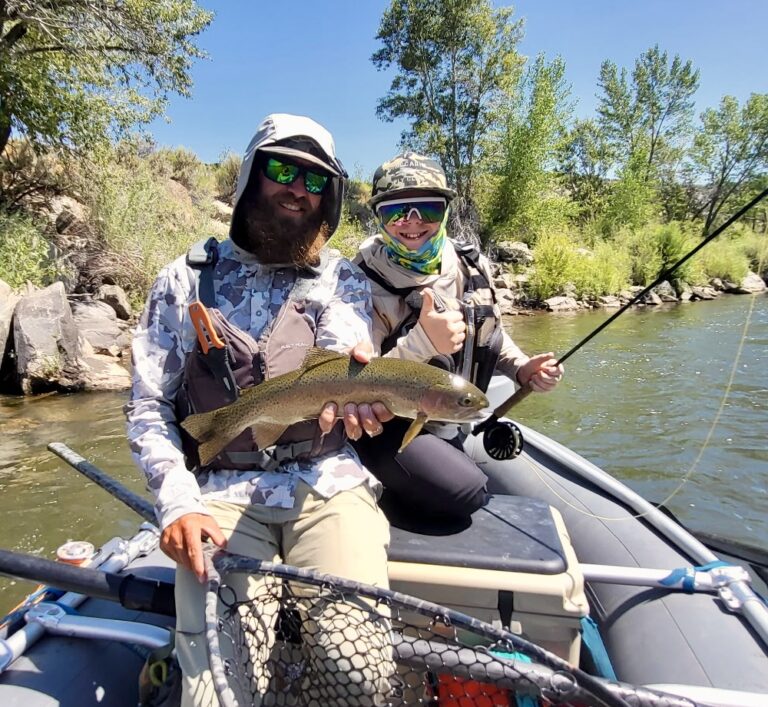
Lately, we’ve had some solid weeks of good fishing on the Gunnison and Colorado. There have been Stoneflies around, the PMDs have been pretty thick, and the Caddis are showing up in good numbers. Keep an eye on those water temps and get out early.
As we get into summer, those high alpine lakes can be good options, as their water temperatures typically stay cool enough. With the low amount of snow, those lakes may be reachable much sooner than normal.
Low water often means spooky fish and technical fishing, which can be fun and rewarding if you’re willing to put in the work. Challenge yourself to sight fish. Slow things down and watch the river, pick one fish, and try to feed it.
Low water is also a great time to see structure in the river, take notes of ledges, boulders, “buckets”, etc. These notes can pay dividends later on down the road when the water is higher. You’ll have some great intel on where fish may be holding during normal water levels. I believe that this is the true silver lining in the clouds when it comes to low water years.
If you can’t fish, learn something about the river whether it’s about the river structure, bug life, or hone your skills on the oars. Low water is a great opportunity to get some technical rowing experience. You may get stuck somewhere but you shouldn’t have to worry about flipping or anything crazy.
No matter what the rest of the year holds for us and the fishing, there’s plenty of opportunities to become better anglers, learn something about ourselves, and protect a vital resource, not only to the fish but for those who live in the west.

0 Comments